

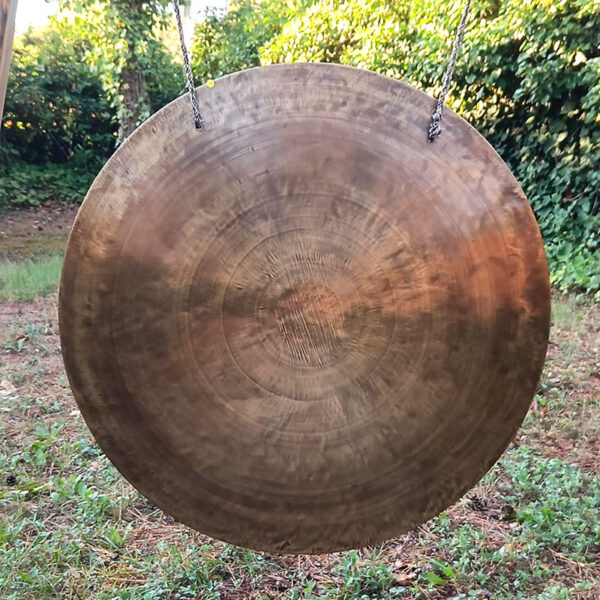
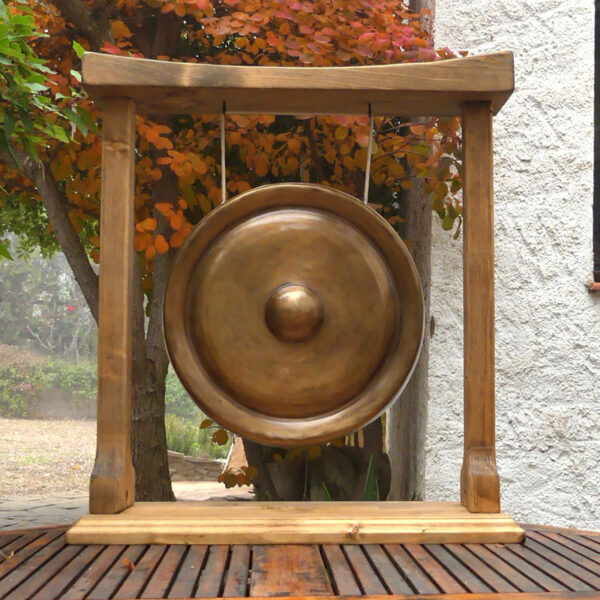


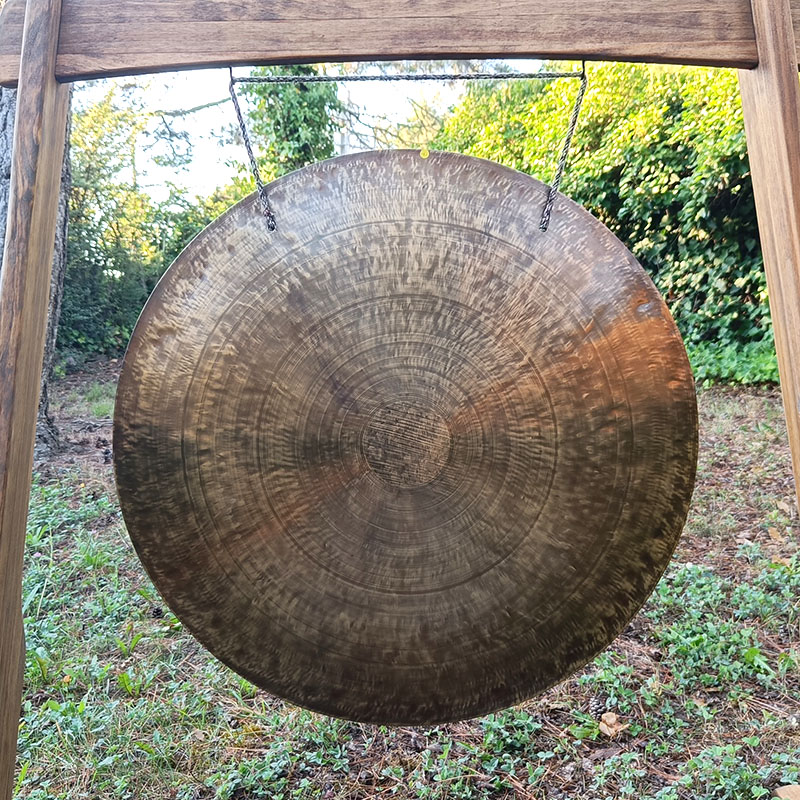
GONG WIND 70 Ø 4,7 kg
710,00 €
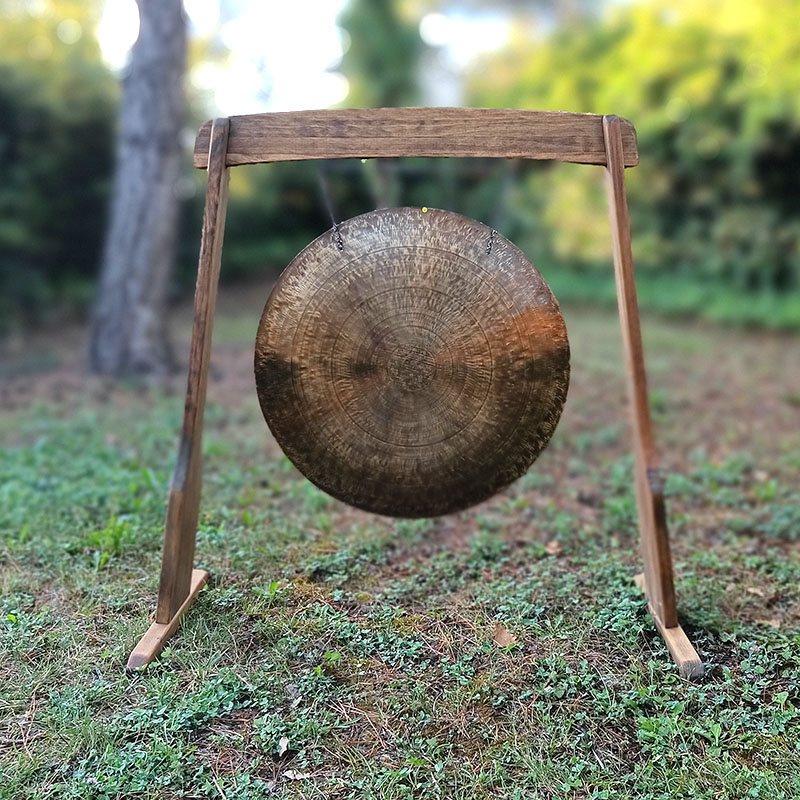
Wind Gong 70 cm
Handcrafted Wind-Type Gong
Diameter: 70 cm
Total Weight: 4,7 kg
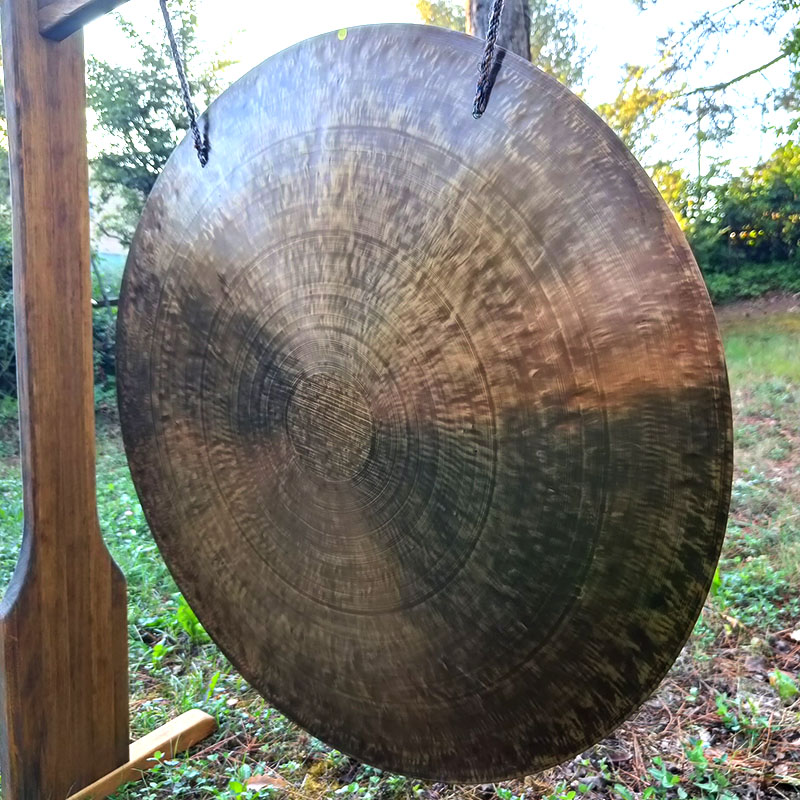
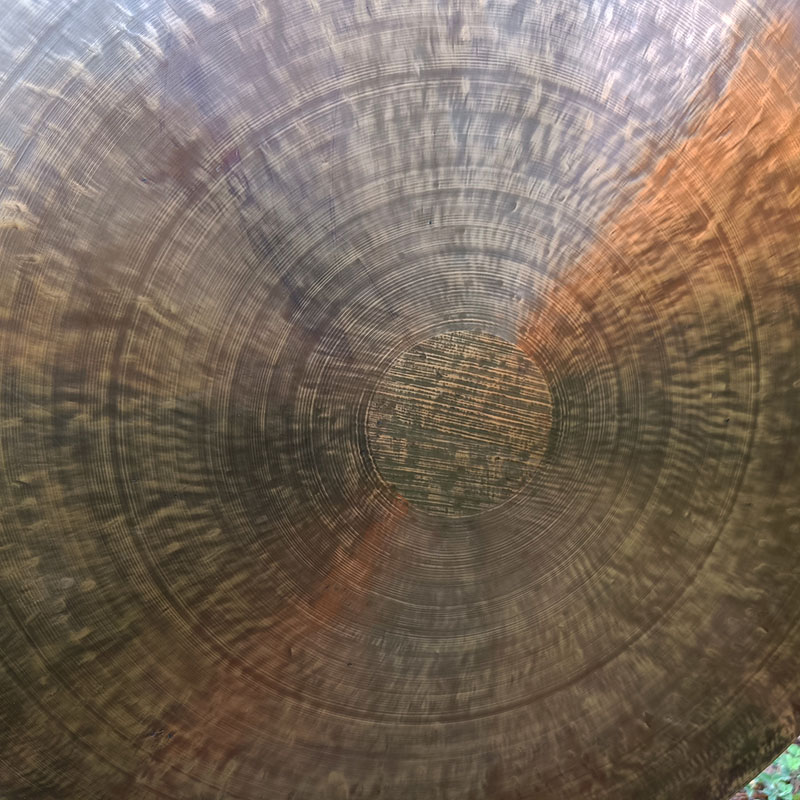
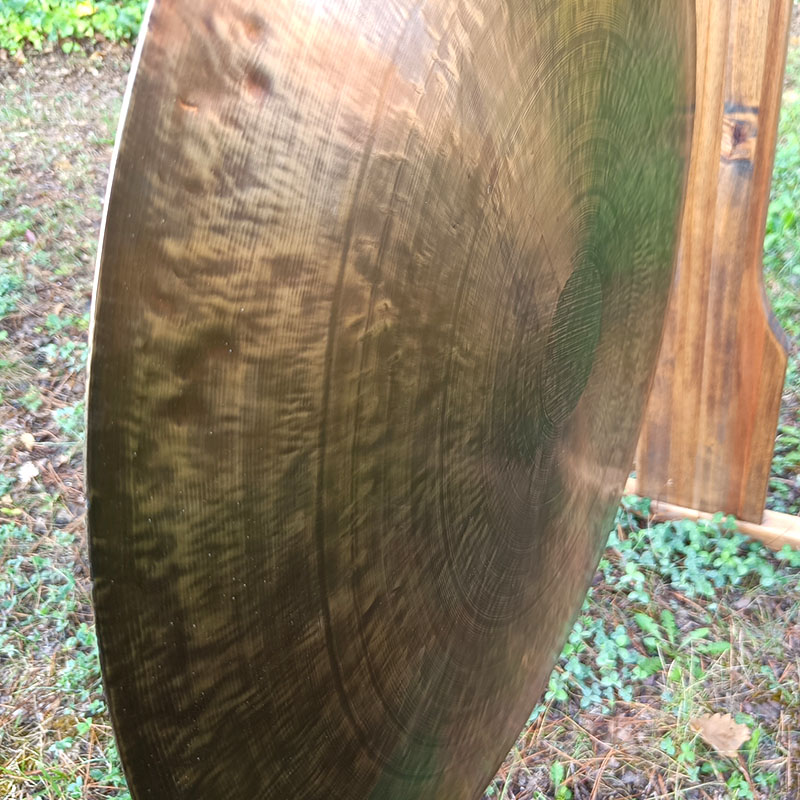
Textured surface suitable for playing with flumis
Origin: Nepal
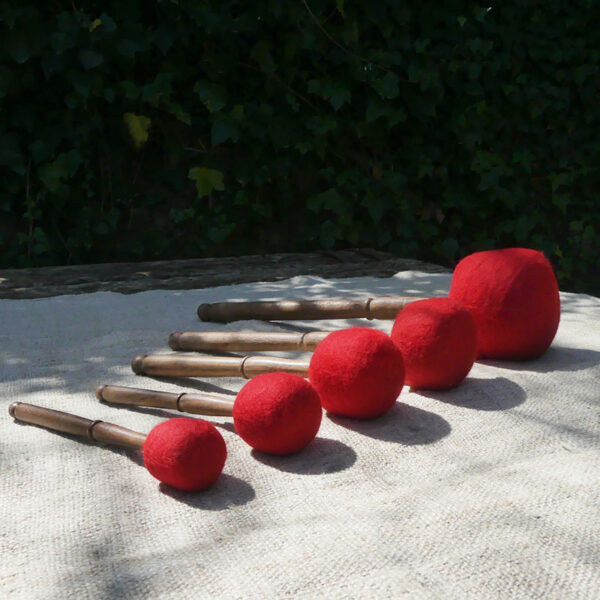
Includes felt mallet suitable for this gong (stand not included)
This Wind-type gong, measuring 70 cm in diameter and weighing 4,7 kg, has been personally selected by Tibetimport.com in Nepal from among many options.
Its flat shape and textured surface offer great versatility when played with flumis or mallets.
The relationship between diameter and weight in gongs is crucial, as it directly affects the duration and intensity of the sound.
A wooden stand suitable for this gong is available in stock but not included in the price.
1 in stock
1 in stock
At Tibet Import, we personally select all our gongs in Nepal — you can see our work on our social media channels. We travel there twice a year to handpick only the finest pieces we can find.
In the market, you can find many different types of gongs, but being labeled Wind, Tam Tam, Chau, or belonging to a specific brand does not guarantee quality. In fact, it’s possible to find Wind gongs that are superior to some Tam Tam or Chau models.
The relationship between weight and diameter is also essential — it’s not the same to make one kilo of bronze vibrate as it is to make five. For example, among gongs with a 70 cm diameter, some may weigh 4 kg (producing higher tones), while others weigh 8 kg (producing deeper, lower sounds).
The material composition plays a crucial role as well. Some gongs are made with high levels of zinc and nickel, such as alpaca alloys, composed of copper (50–65%), zinc (20–30%), and nickel (10–30%) — these tend to produce brighter, higher-pitched tones.
In contrast, Nepalese gongs, much like Tibetan singing bowls, are made with higher proportions of copper and tin, without zinc or nickel. This composition increases their value but results in warmer, deeper, and more resonant tones.
At Tibet Import, we specialize in low-frequency, deep sounds, and our selection focuses on rich, grounding, and resonant gongs. We understand these deep tones as calming and emotionally stabilizing, in contrast to high-pitched gongs, which we perceive as energizing and activating.